Sunday, July 2, 2017

A House for Sale and a Mystery in Its Past

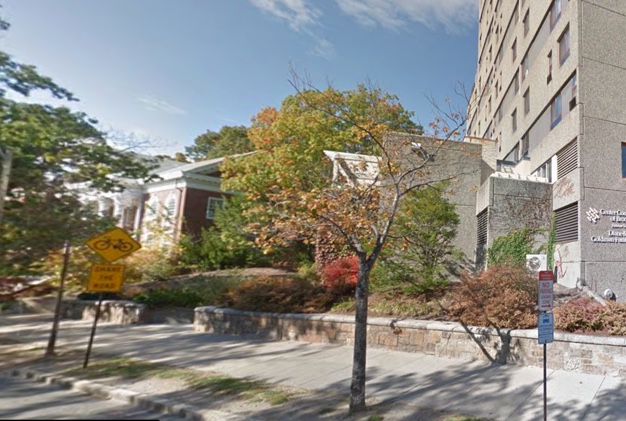
Financially-ailing Wheelock College is looking for a buyer (according to news reports) for the Victorian house at 295 Kent Street that has served as home to the college's presidents since 1963. I decided to look into the history of the house and, as is often the case, my research led in unexpected directions.

295 Kent Street
295 Kent Street
The house, built around 1872, has had only three owners. Wheelock purchased it from the estate of hotel executive J. Linfield Damon who lived there from 1901 until his death at the age of 95 in 1963.

But it was the original owner of the house, S. Dana Hayes, whose story proved the most interesting. The house was built for him and remained in his family from the time of its construction until its sale to Damon in 1901. But Hayes himself disappeared under mysterious circumstances in 1880 and was never heard from again.

Globe headline on Hayes disappearance
Boston Globe headline, January 30, 1880.

Samuel Dana Hayes, who went by S. Dana,  was born in Roxbury in 1840. His father, Augustus Allen Hayes, was a chemist and one of Massachusetts state assayers of ores and minerals. The younger Hayes studied at his father's alma mater, Norwich University in Vermont, although he did not graduate, and by the 1860s had followed in his father's footsteps as a chemist and state assayer.

The state assayer's office was established by the legislature in 1846. Assayers — there could be more than one  — were to certify the chemical composition of ores and metals submitted to them. They were to be paid "a reasonable compensation by the person securing such assay to be made." Assayers were later given the added responsibility of ensuring that "spirituous and intoxicating liquors [were] of a pure quality, and unadulterated with any mixture, or noxious or poisonous substance."

Hayes quickly established a reputation as one of the leading assayers in the country. He lectured and wrote on chemical properties, testified in court cases (including cases of suspected poisoning) and developed a successful private business certifying the composition of a wide variety of products, including:
  • baking powder
  • mineral water and ginger ale
  • vinegar
  • yeast
  • cocoa
  • whiskey
  • lager beer
  • skin care treatments ("The Queen's Toilet")
  • mineral oil
  • fertilizer
  • cookware and silverware
Advertisements for many of these products in newspapers across the country included endorsements from Hayes, usually noting his official role as a Massachusetts state assayer.

Newspaper ads with Hayes' endorsement
Newspaper ads with product endorsements from S. Dana Hayes. Left to right: Pearl Baking Powder, in the Black Hills Weekly Pioneer, Deadwood, South Dakota; Gaff, Fleischmann & Co. Yeast (yes, it's that Fleischmann's Yeast) in the Boston Post; and Heublein's Lager Beer in the Hartford Courant. (Click image for a larger view.)
One ad, for Hall's Vegetable Sicilian Hair Renewer, noted:

When a discoverer of any scientific subject, asks the co-operation of the learned in science, to test the merit and truth of his discovery by severe tests and practical results, and then to indorse [sic] and recommend it, it is fair to presume it is valuable for the purpose intended. Such has been the course pursued by Mess'rs. Hall & Co., proprietors of Hall's Vegetable Sicilian Hair Renewer. And all those who have tested it (among whom we may mention Dr. A.A. Hayes and S. Dana Hayes, Chemists and State Assayers of Massachusetts ... assert it is the best preparation in use for all cutaneous diseases of the scalp.

Hayes had married a Scottish woman, Margaret Gibson, in Scotland in 1860. In 1877,  few years after moving into the Kent Street home, they adopted a little girl. Three years later, in January 1880, Hayes left Boston for New York and attended to some business for a law firm in a patent infringement case.  That was the last time he was seen or heard from.

Both the Boston Globe and the New York Times reported two weeks later that before disappearing Hayes had made a careful examination of his business, paid all his debts, arranged for his wife to have power of attorney, and left her a note saying he would not be returning but that she would be informed of his whereabouts in the event of his death.

Friends and acquaintances, including his brother, attributed the odd behavior to a temporary "aberration of mind", perhaps brought on by the death of his mother a few months earlier. Business troubles were dismissed as a possible cause, as his business was in good shape. They expected to hear from him shortly.  The Globe correspondent, however, reported that "domestic troubles are really at the bottom of the matter." In any case, he did not return.

Margaret Hayes placed an ad in the New York Herald in August 1881 looking for word of her husband. (It was reproduced in the Boston Globe.)  In the ad, which the Globe titled "Where Is S. Dana Hayes?", she noted that he had "gone West in April last" so perhaps she had obtained additional information since his disappearance 19 months earlier. But there was no new news.

Where Is S. Dana Hayes
Boston Globe, August 4, 1881
Hayes' father Augustus died in June 1882. His will left one third of his estate to S. Dana and his heirs, provided he came forward (or was proved dead) within three months. Otherwise his share would be divided equally between his brother and sister. The family placed a personal notice in a New York paper, reproduced in the Boston Post, urging him to come forward but there is no record of him having responded.

Ad placed after Hayes' father's death
Boston Post, September 14, 1882

Margaret Hayes lived in the Kent Street house on and off until selling it in 1901. (She rented it out and lived elsewhere in Brookline when not living there.) She died some time after 1910. The Hayes' adopted daughter, Hope Beatrice Hayes, graduated from Smith College in 1899, married a florist, and was a school teacher in Pittsfield, Newton, and Pelham, New Hampshire. She died in 1929 at the age of 54.

Product advertisements citing Hayes' stamp of approval continued to appear periodically for years. An ad in the Washington Post for the Forest Glen resort in North Conway, New Hampshire promoting "the purest water in New Hampshire" noted that "S. Dana Hayes, State Chemist of Massachusetts, said this is a remarkably pure and excellent water." That was in 1906, more than a quarter century after Hayes disappeared.


Monday, June 19, 2017

1898: Devotion House Saved from the Flames

One-hundred and nineteen years ago today (June 19, 1898) sparks from a barn fire across Harvard Street threatened the Edward Devotion House in Coolidge Corner. Firefighters were able to douse the flames, saving the then 158-year old house, one of the oldest in town.

The fire began in the new barn on the farm of William J. Griggs, adjacent to the Griggs house at 330 Harvard Street. By the time it was spotted by a boy passing along the street a little after 7:30 in the morning it was too late to save the barn and the Griggs house itself was smoldering in several places.

Devotion House and Griggs farm, 1897
This 1897 map shows the Willliam Griggs house, just below Shailer Street, across the street from the Devotion School and Devotion House. The new barn that burned a year later was built adjacent to the house.

Strong winds carried embers onto the roofs of several nearby houses, including the Devotion House. Neighbors used garden hoses, pails, and fire buckets to fight the fires until firefighters arrived. The Griggs house was saved, and firefighters were stationed at the Devotion House to make sure it did not suffer major damage. (The Town had recently allotted funds toward the preservation of the historic structure.)

Edward Devotion in 1895
The Edward Devotion House as it appeared in 1895, three years before the fire that briefly spread to the house from across Harvard Street

William J. Coolidge
William J. Griggs
Brookline Library photo
Click for larger view
William Griggs (1821-1906) whose family farm occupied the site for many years, lost everything that was in the barn, including four horses, three cow, and five dogs, as well as carriages, wagons, harnesses, a bicycle, and several tons of hay.

Griggs and his brother-in-law David Coolidge founded the Coolidge & Brother store, operated by David's younger brothers William and George, in 1857. The store's location, at the intersection of Harvard and Beacon Streets, became known as Coolidge's Corner and, later, as Coolidge Corner.


Friday, June 16, 2017

Gillette & Sias Mansions, Beacon Street

This stretch of land on the north side of Beacon Street just west of Lancaster Terrace would be unrecognizable today except for the stone wall, which still stands. It is now the site of the apartment building at 1550 Beacon, built for senior housing in the 1970s, and Temple Beth Zion at 1566 Beacon, completed in 1948.

(Note: This article first appeared in Brookline Patch as part of a biweekly series of historical images of Brookline from the Brookline Historical Society and the Public Library of Brookline.)

Gillette & Sias Mansions
 
The two large houses formerly on the site were associated, at different times, with the heads of two well-known consumer product companies. The house on the left was the home from 1907 to 1913 of King C. Gillette, inventor of the safety razor and founder of the company that bears his name. It was torn down in 1944. The house on the right was built by Charles D. Sias, a senior partner in the Chase & Sanborn coffee company. A later owner moved it up the hill to Mason Terrace, where it remains today.

A present-day view of the site, via Google Street View, is below.

1550-1566 Beacon Street Today

Both houses were built after the 1880s expansion of Beacon Street from a narrow country lane to a wide boulevard, designed by Frederick Law Olmsted and with trolleys providing easy access to Boston. The older of the two is the Sias house, built in 1889 for Charles Sias, who began as a salesman with Chase & Sanborn before rising to become senior partner with the firm. It was designed by Arthur Vinal who was also the architect of the Richardsonian Romanesque High Service Building at the Chestnut Hill Reservoir, now condominiums and the Waterworks Museum, and the gatehouse at what is now Fisher Hill Reservoir Park.

The next owner, lumber company executive Frederick McQuestern, had the house moved up the hill to 41 Mason Terrace, shown below.

King Gillette

The Gillette house was built in 1892 for Benjamin Lombard Jr., a banker and real estate executive. It was designed by the architectural firm of Little, Brown, & Moore, which also designed the main house of the Brandegee Estate in South Brookline. King Gillette purchased the house for his family in 1907 and lived there until 1913 when they moved to Los Angeles.

Gillette had first come to Brookline in 1895 when he was a salesman for the Crown Cork Company, maker of disposable bottle caps. It was while living here that he came up with the idea for the safety razor, as described by Gillette himself in a company magazine in 1918:

"I was living in Brookline at No. 2 Marion Terrace at the time [1895],” he wrote, "and as I said before I was consumed with the thought of inventing something that people would use and throw away and buy again. On one particular morning when I started to shave I found my razor dull, and it was not only dull but it was beyond the point of successful stropping and it needed honing, for which it must be taken to a barber or to a cutler. As I stood there with the razor in my hand, my eyes resting on it as lightly as a bird settling down on its nest—the Gillette razor was born.”
It took years of experimentation to solve the technical difficulties involved in producing the kind of razor Gillette had in mind, but a patent was granted in 1904 and sales took off, making Gillette a great financial success and a household name. Three years later he bought the Beacon Street house.

A close look at a section of the stone wall in the old and new photos (below) makes it possible to pick out individual stones. This section is to the right of the tree in the modern image and further to the right in the older one.

Stone Wall

Friday, June 2, 2017

Richards Tavern, Chestnut Hill


The 18th century building shown here was known as the Richards Tavern or Richards Hotel. It stood on Heath Street (foreground) near the intersection with Hammond Street, approximately where 521 Heath Street is today. 
 
(Note: This article first appeared in Brookline Patch as part of a biweekly series of historical images of Brookline from the Brookline Historical Society and the Public Library of Brookline.)
Richards Tavern
View larger size image

It was built sometime between 1750 and 1770 — sources vary — by Ebenezer Winchester, a member of the religious splinter group called the “New Lights,” one of many groups that arose as part of the religious revival known as The Great Awakening. In addition to serving as the Winchester home, it included a large hall for meetings of Winchester’s co-religionists.

The house passed through two other owners before being sold to Ebenezer Richards who operated it as a tavern and hotel until about 1830. The Worcester Turnpike (now Route 9) which opened in 1806 passed just to the rear of the tavern. A toll gate and a toll house for the gatekeeper were placed at that spot on the Turnpike which no doubt contributed to the success of the tavern (It became something like an early 18th century version of a modern highway rest stop.)

The former tavern was acquired by Irish immigrant William Fegan in 1863. Fegan operated it as a boarding house. Harriet Woods in her Historical Sketches of Brookline (1874) described it as “now occupied by many Irish tenants.” Fegan died in 1911 at the age of 87. The house, deteriorating in condition (as seen in the 1927 photos below), remained in the Fegan family until it was torn down in 1928. 
Richards Tavern 1927
View zoomable larger size image


The map below, adapted from a segment of the 1927 Brookline atlas, shows the former Richards Tavern (highlighted by the red rectangle and with the name J.J. Fegan) on Heath Street near the corner of Hammond Street. Boylston Street (Route 9) runs from the top edge to the right edge. The Baldwin School is at lower right and part of Holyhood Cemetery is at lower left. 
 
Richards Tavern on 1927 map
Click image for larger view
 

Sunday, March 19, 2017

Brookline Village Coffee Shops & Their Pasts

In one short block in Brookline Village, two international coffee shop chains compete for business in storefronts just three doors apart. The more established Starbucks is at 7 Harvard Street, and the newcomer, Caffé Nero, is at 1 Harvard Square.

Woolworth's interior
Employees in the Brookline Village F.W. Woolworth store (now Starbucks) in 1914
Those retail locations, of course, have a much longer history than either coffee chain and, remarkably, we are able to get a glimpse of what the interiors of both spots looked like more than a century ago. Interior images from that far back are hard to come by. But for these two locations we have views via a newspaper sketch for one and two photographs for the other.

National Bank Building in 1893
The older of the two buildings is the one that is now home to the first Brookline location of the London-based Caffé Nero. Designed in 1892 by the firm Hartwell & Richardson, the building, originally known as the Lowe Building, had stores on the ground floor and apartments above. One of the first tenants was the Brookline National Bank and the building soon became known as the National Bank Building.

The bank purchased the building in 1902 and engaged architects Peabody & Stearns to expand and redesign it. They enlarged the third floor by raising the roof eight feet. (It became home to a hall for the Beth-Horon Lodge of Freemasons.) Apartments on the second floor were turned into offices.

On January 1, 1903, the new Brookline Post Office opened on the ground floor, in the space that is now Caffé Nero. The Boston Globe previewed the new post office with the headline “Brookline’s New Year’s Gift from Uncle Sam” and a sketch showing the public space, as well as the redesigned exterior.

Sketch of the interior of the new Brookline Post Office in Brookline Village, now Caffé  Nero. Boston Globe, December 30, 1902
Sketch of the interior of the new Brookline Post Office in Brookline Village, now Caffé  Nero. Boston Globe, December 30, 1902
Mail slot in Caffe Nero women's room doorWhen shown the image, employees at Caffé Nero were intrigued. They also thought it solved a mystery: Why did the door to the women’s bathroom, shown here, have a mail slot in it? (It was probably an interior door reused in later renovations.)

This was to serve as the main Brookline post office, relocated from an inadequate space on Washington Street in the Village, until the construction of a new post office in Coolidge Corner (in space now occupied by Zaftig's deli, Jin's restaurant, and Cool Edge Salon) in 1923. The location that is now Caffé Nero remained the Brookline Village branch of the Post Office until some time after World War II.

7-15 Harvard Street in the early 1980s.
Town of Brookline photo.
The more modest two-story building housing the Brookline Village Starbucks was built in 1911 to house stores and offices. A year later it became home to Brookline’s first F.W. Woolworth five-and-dime store, which was to stay in business there for more than three quarters of a century.

Woolworth’s occupied half of the first floor, space now divided between Starbucks and Vizio Optic, until closing in 1989. The Historical Society was lucky to obtain the two photographs below of the interior of that store from another historical society. Sales banners hanging from the ceiling in one of the photographs helped us to date the images to 1914.

The banners advertise a Spring Sale, April 20th to April 25th. Why six days, not seven? Because from Puritan times until 1983 Massachusetts Blue Laws banned Sunday store openings. (April 19th was a Sunday in 1914 and 1926, but the clothing appears a better match for the earlier date.)

Interior of Woolworth's store, Brookline Village, 1914
Two interior views, above and below of the Brookline Village Woolworth's in 1914
Interior of Woolworth's store, Brookline Village, 1914
To explore these photos of the Brookline Village Woolworth’s in more detail, visit supersize versions on the Historical Society website: Image 1 | Image 2

One puzzle: there are skylights clearly visible in the photos. How can that be in a two-story building? Records in the town building department provide the answer: the building was originally only one-story at the back; the second story was added to that part of the building later.

Next time you’re enjoying a coffee or tea or a pastry in either of these Brookline Village coffee shops, be sure to reflect on what had been there more than a century ago.

Thursday, December 22, 2016

A Brookline Village Bounty, 1836

Hundreds of fruit trees, berry bushes, grapevines, herbs, and flowers in the heart of Brookline Village? Hard to picture isn't it?

But an 1836 property advertisement in the Boston Post paints a delightful picture of just such a bounty in the block bounded by present-day Washington Street, Davis Avenue, Waverly Street, and Thayer Street.

The Grounds are extensive and filled with all the choicest fruit, flowering shrubs, vines, herbaceous plants, &c, adapted to out door culture—a part as follows: Several hundred ornamental and fruit trees, pears, peaches, plums, Cherries, apples, &c, all in bearing state—ten large strawberry beds, (will produce this season five hundred boxes—200 currant, red and white Dutch raspberry and gooseberry—from six to ten hundred rose bushes—many hundred herbaceous plants, Dahlias, &c—large bed of tulips—border of pinks. A Grapery, containing 21 different kinds, and will probably produce three tons this season—the fruit, vines, &c are all of the choicest kinds and selected with great care and experience, and all in the most flourishing condition.

Aerial view of former Isaac Thayer property in 2016
The area bounded today by Washington Street on the north, Davis Avenue on the south, and Thayer and Waverly Streets on the west was once filled with a wide variety of flora planted by the Thayer brothers. The star marks the location of the house, later 43 Davis Avenue, built by Isaac Thayer in 1832.
The ad — "COUNTRY SEAT FOR SALE AT AUCTION" — was placed on behalf of Isaac Thayer by the Boston auction house Coolidge & Haskell. (See the full ad at the bottom of this post.) Thayer and his brother Seth had bought a large tract of land a few years earlier and both brothers built houses near Washington Street.

Seth Thayer's house was on land belonging to the Davis family. (He wife was a Davis.) His brother Isaac's house was on Washington Place, later renamed Davis Avenue, on a part of the land purchased by the brothers. Here's how he described it in the ad:

The house is large and every way convenient—containing on the ground floor, two parlors with folding doors--broad entry from front to rear—sitting room—kitchen, washroom &c. It commands a view of the city and surrounding country, and of the travel on four great roads.

The house built in 1832 by Isaac Thayer as it appeared in the late 19th century under the ownership of Frederick and Lucy Beck.
Source: A History of the Beck Family (1907)
The "four great roads" likely refers to the Worcester Turnpike (now Route 9), the Brighton Road (now Washington Street) the Road to the College (now Harvard Street) and Cypress Street. For potential buyers wary of the proximity to traffic on these "great roads" the ad notes that the property is "entirely out of the reach of dust."

The property did not sell in 1836. Thayer advertised it again (with much less description) in May and June 1837. It was eventually sold to James Patten. (The date of the sale is uncertain.) A new Town Hall on Washington Street in 1844 and the coming of the railroad to Brookline Village in 1847 spurred extensive development in the neighborhood. The property was subdivided into many parcels in the following decades, no doubt with the loss of much of the horticulture.

The former Thayer house and its much reduced property were acquired by Frederick and Lucy Beck around 1869.

Former Thayer property in 1874
This partial map from the 1874 Brookline atlas shows the former Isaac Thayer property broken into several parcels filled with new development, especially on the Washington Street side. The large pink property marked F. Beck includes the original Thayer house.
Source: WardMaps LLC
43 Davis Avenue as photographed after the blizzard of November 1898
Source: A History of the Beck Family (1907)
Frederick Beck died in 1909 and his wife Lucy in 1915. The house was torn down shortly after that. The Berkeley Court cul-de-sac was developed on the site of the house in the early 1920s.

Berkely Court
Berkeley Court, off Davis Avenue, on the site of the former Thayer (later Beck) house. (Via Google Earth)
Thayer property 2016 map
The former Isaac Thayer property on a 2016 map (Via Google Maps)

Thayer Ad, Boston Post, 1836
This advertisement for an auction of Isaac Thayer's property appeared in the Boston Post on May 30, 1836. (Click the ad for a larger view)


Sunday, August 7, 2016

Virginia Aiken, Teenage Dealer of Electric Cars

On Memorial Day in 1912 a parade of 125 electric cars and trucks made its way from Brookline Avenue through the Back Bay to downtown Boston. At the head of the parade, as she had been in a smaller procession the year before, was 17-year old Virginia E. Aiken of Brookline.

Aiken was the niece of Day Baker, the head of the Electric Vehicle Club of Boston, with whom she lived on Winthrop Road. But the former Runkle School student was no mere figurehead. She was New England representative of the Buffalo-based Babcock Electric Carriage Company, responsible for sales throughout the six-state region.

Virginia Aiken promotional postcard
Promotional postcard for Virginia Aiken, Babcock Electrics
(Click image for larger view)
Aiken operated out of the Brandon Garage at 643 Washington Street, where she maintained an office, employed a stenographer and a bookkeeper, and kept several models of Babcock Electrics to demonstrate to prospective buyers.

1912 ad for Virginia Aiken's Babcock Electrics
Ad for Virginia Aiken's Babcock Electric dealership, Boston Post, May 9, 1912
1913 Map showing location of the Brandon Garage
The Brandon Garage at 643 Washington Street was Virginia Aiken's base of operation.
Source: WardMaps LLC
How did a teenage Brookline girl arrive at such an unusual situation for her age and gender more than a century ago?

Virginia Aiken
The Automobile Journal, 1912

Virginia Elise Aiken was born in Philadelphia on April 10, 1895, the daughter of Frank E. and Ada (West) Aiken. Her father was a freight inspector and her mother was a stenographer. Her father's father, Frank Eugene Aiken Sr., was a well-known actor and theater owner active mostly in Chicago, but at other times in Philadelphia and New York.

Aiken spent most of her childhood in Chicago. In 1910 or 1911 she moved to Brookline to live with her father's sister Viola and Viola's husband Day Baker and to take advantage of the better educational opportunities in the Boston area. They lived at 145 Winthrop Road. Virginia enrolled at the Runkle School and later at Miss Haskell's School for Girls on Marlborough Street.

Day Baker was New England agent for an electric truck manufacturer and a prominent advocate for electric vehicles. His efforts brought him into contact with Thomas Edison and he became New England representative of the Edison Storage Battery Company which made batteries for automobiles and trucks. (Edison's 22-year old son Charles was one of the ushers at an 18th birthday dance thrown for Aiken by her aunt and uncle at Brookline's Gardner Hall.)

A lengthy 1912 profile of Aiken in The Automobile Journal told how she obtained a license and drove thousands of miles, most of them in electrics. And as the Boston Globe reported:

For some months she has been seen in her pearl gray Victoria around the congested streets of the city, driving in and out among carriages, wagons, street cars and great trucks, or on the streets and boulevards of the suburbs. People have stopped and wondered at the ease and grace with which she handled her automobile, but she always smilingly disclaims any especial skill and replies "You know, it's no trouble to operate; you don't have to crank it, nor do you have a whole lot of levers about which to think: it is so simple to run—it's electric."

But her interest in cars, reported The Automobile Journal, went beyond driving.

Now, Miss Aiken is practical and she began to study the electric carriage with keen enthusiasm. Instead of merely giving attention to the maintenance and care she went back to rudiments and systematically acquired knowledge concerning the battery and the motor. She studied electrical subjects carefully and mastered each with its particular reference to vehicles. She was fortunate in having her uncle as an adviser and under his direction she was able to apply her knowledge to good advantage.

Constantly using the electric machines she met with all conditions that might be encountered and it was with extreme satisfaction that she solved all problems and successfully met every situation. The girl did not hesitate to work about the cars whenever necessary. She found delight in mechanical work and did it surprisingly well.

When Francis Babcock, founder of the Babcock Electric Carriage Company, visited Boston and met Aiken he suggested she become his New England agent and helped set her up in business. Aiken told the Boston Globe she planned to use the profits from the business to pay for her education.

The budding entrepreneur also understood the value of good marketing. She put half of the profits of her first sale into promotion, including newspaper advertisements and engraved notes. "[T]his, and her energetic work, [reported The Automobile Journal] brought to her other customers."

Electric vehicles were sometimes marketed specifically to women, and Aiken's unusual position as a female agent may have helped. She was interviewed by the Boston Post for a July 1912  article that ran under the headline "Miss Aiken's Advice to Women Motorists."

"Why, yes, [she told the reporter] I know it does you good to ride in an electric—it has done me good—don't I look the model healthy electric young woman? Seriously, I do believe that it gives one good health, a good appetite and good control of one's nerves to operate an electric vehicle.

I have in mind a Newton lady who has one of our cars—she drives it herself, charges it with a mercury arc rectifier in her own little garage and looks after her battery herself. She takes great enjoyment in looking after all these little details herself. The out-of-door air exercise that she gets in caring for her car and the long rides which she takes almost daily keep her in the best of health.

No, you newspaper men cannot too strongly urge the driving of electric automobiles by the ladies of Boston as a health-giving and enjoyable method of regaining and keeping health, but it does not end with the health question. The convenience of making calls, shopping, attending church and social functions are all points that are worthy of mention—but of course good health is always a strong argument.

The 1912 advertisement below for Aiken's display at the Boston Auto Show illustrates how Babcock Electrics were marketed especially to women. ("The Runabout for Misses. The Victoria for Ladies".)
Boston Post ad for Virginia Aiken's dealership
Ad for Virginia Aiken's display at the Boston Auto Show Boston Post, March 3, 1912

Many articles about Aiken were published in 1912, in the Boston newspapers and in trade publications like The Automobile Journal, Motor Age, and Electrical World. But her dealership was apparently short-lived. A later article in The Automobile Journal about her Fall 1912 exhibit at the electrical show at Mechanics Hall in Boston, said

While Miss Aiken will retain an interest in the Buffalo electric, it is her intention, after the electric show, to devote the most of her time to studies and music, believing that the proportions to which she has brought the business warrant placing it in the hands of a large automobile sales establishment. Full details of this move will be announced later.

I have not been able to find any such later announcement but there were no further mentions of her dealership after 1912.

Engagement announcement Boston Post
Boston Post, March 30, 1918
In 1918, Aiken's engagement to a Harvard Medical School graduate named Lawrence Weld Smith was announced in a brief article in the Boston Post. The announcement noted that, in addition to Miss Haskell's School (a college preparatory school for girls in the Back Bay), she had attended the Farmer School of Cookery (founded by Fanny Farmer). By 1918, she was back in Chicago where, the article said, she was active in Red Cross work.

The Aiken-Smith marriage never happened. Instead, on Christmas Eve 1919 in Chicago, Aiken married a Swiss immigrant named Robert (or Roberto) Tranquillo Pellandini. They had a daughter, born in Chicago in 1921, and lived for several years in Mexico where Robert Pellandini's family had business interests. (Virginia Pellandini took Swiss citizenship and had to reapply for U.S. citizenship when they returned in 1925.)

The Pellandinis were frequently on the move. They lived, at various times, in Chicago, Mexico City, Easton, Brockton, and Lincoln, Massachusetts, and Lorain, Ohio, before settling in Hot Springs, Arkansas. Robert had several jobs, as listed in directories and census records, including sales manager for a shovel and tool company and accountant with the Ford Motor Company. No further career information is listed for Virginia.

Robert Pellandini died in 1980. Virginia Aiken Pellandini died, at age 92, in Hot Springs in 1987.
Gravesite of Robert and Virginia (Aiken) Pellandini
Memorial Gardens Cemetery, Hot Springs, Arkansas

References